Hearing aids have come a long way over the past 10-15 years.
As each year goes by, hearing aids become smaller, more discreet, and more reliable at enhancing sound. They also come well equipped with a number of innovative features, including the ability to connect to other devices wirelessly, which is what we’ll be reviewing today.
Here’s how wireless technology works and how you can benefit.
How Bluetooth technology works
Bluetooth is a standardized wireless communication platform that permits devices to communicate with each other through radio waves. A wide variety of products incorporates Bluetooth technology, including smartphones, music players, tablets, computers, and televisions.
Have you ever observed someone talking on their phone using a hands-free wireless headset? Or somebody taking a call from their cell phone using their car audio system? That’s Bluetooth technology in action.
So can you buy a Bluetooth hearing aid?
Yes and no. Bluetooth technology calls for a greater power supply than can be supplied by hearing aid batteries. But there is a workaround, and in fact, there are two.
Your options for wireless hearing aids
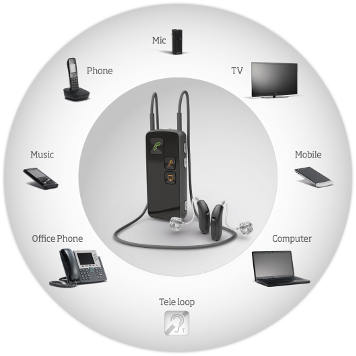
Hearing aids do not integrate Bluetooth technology directly because, as we explained, it would drain the battery too quickly. Fortunately, manufacturers solved this problem long ago by creating an intermediary between the hearing aid and the Bluetooth device (computer, TV, phone, etc.). This intermediary is referred to as either a “streamer” or an “assistive listening device.”
Here’s how it works: your Bluetooth equipped cell phone communicates wirelessly to the streamer which then directs the signal to the hearing aid without depleting the battery.
So, if you’re shopping around for wireless hearing aids, you have two principal options:
- Hearing aids combined with an assistive listening device – as outlined above, the assistive listening device, or streamer, which is a small hand-held device, acts as an intermediary between the Bluetooth device and the hearing aid.
- Made for iPhone hearing aids – some hearing aid models are designated as “Made for iPhone,” which basically means that the iPhone acts as the streamer itself, connecting directly with the hearing aid.
Your hearing care professional can help you decide which option is right for you.
The benefits of wireless hearing aids
Whether using a Made for iPhone hearing aid or a streamer, there are a variety of perks to going wireless, including:
- Better music listening experience – think about streaming your favorite music from your iPhone or handheld music player directly to your hearing aids. By doing this, your hearing aids become a pair of top-quality earbuds.
- Hands-free phone calls – answering calls without the use of your hands is more convenient and having the audio stream directly to the hearing aids results in better sound quality.
- Clearer TV sound – streaming the audio from your computer, tablet, or TV results in sharper sound and enhanced speech comprehension from movies and TV shows. You’ll never struggle to follow dialogue again.
- Better gym experience – listen to your favorite music or podcasts at the gym without any wires getting in the way.
- Customized control – inconspicuously adjust your hearing aid settings and volume by utilizing your wireless remote control or iPhone (with compatible models).
- Connection to hearing loops – hearing aids fit with telecoils can connect with hearing loop systems in community venues like auditoriums, movie theaters, and courts.
Request a call back
Please complete the below form and one of our friendly staff will call you shortlyFree Online Hearing Test
Hearing tests check a person’s ability to hear the loudness and pitch of sounds. Some reasons why you may need a hearing test include ringing in your ears, others companing that you talk too loud or watch the TV on high volume, or simply you have trouble hearing conversations.
While there’s no replacement for a consultation with a hearing-care expert, our free online hearing screening can provide some quick and useful feedback about your hearing. The screening should be carried out in quite space and all you need is a pair of headphones!
Type your details to start your free hearing test